
















Merchant Risk
Merchant Risk
Onboard more merchants with confidence
Combine KYB, website presence, and acquiring data with proprietary device and behavior signals to improve onboarding decisions and surface risk earlier.














Approve more merchants
Use our deep onboarding signals to quickly identify legitimate businesses and fast-track their applications.

Continuously monitor risk
Detect early signs of bust out fraud, rising dispute volumes, declining auth rates, and growing compliance risk.

Scale faster with automation
AI performs deeper due diligence, investigates risk changes, and flags merchants that need deeper review.

Analyze merchant behavior across your portfolio to proactively spot risk and prioritize reviews
Risk Profile Changes
Established merchants with shifting risk profiles
Catch sudden growth, behavioral shifts, and deterioration before they result in losses.
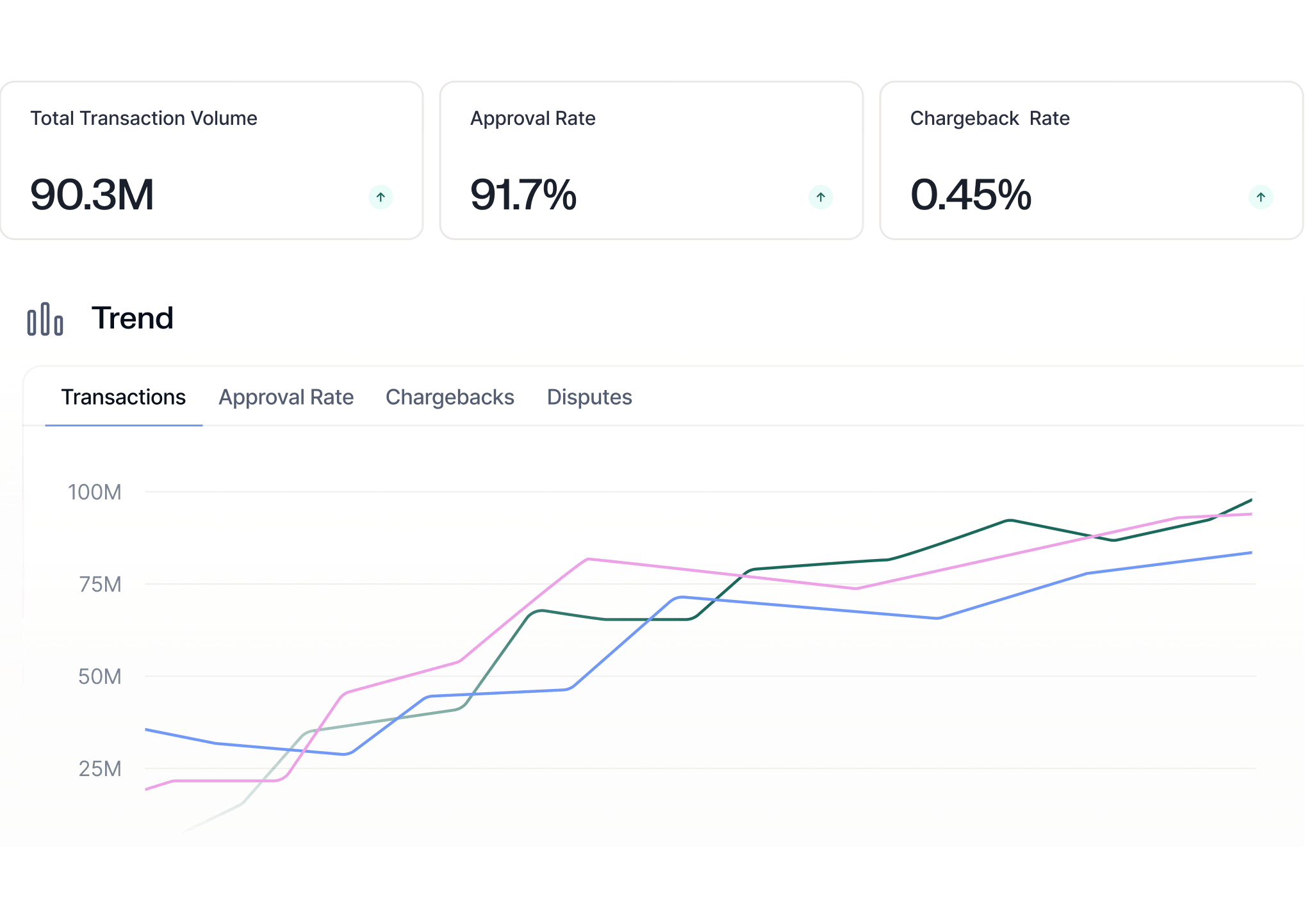

Identify sudden spikes in volume, GMV, velocity, or transaction mix that break historical merchant baselines.

Flag rising disputes, MCC changes, or card-network program signals diverging from merchant baselines.

Escalate merchants into enhanced due diligence when they cross risk thresholds.


Anti-Money Laundering
Surface money laundering and mule activity
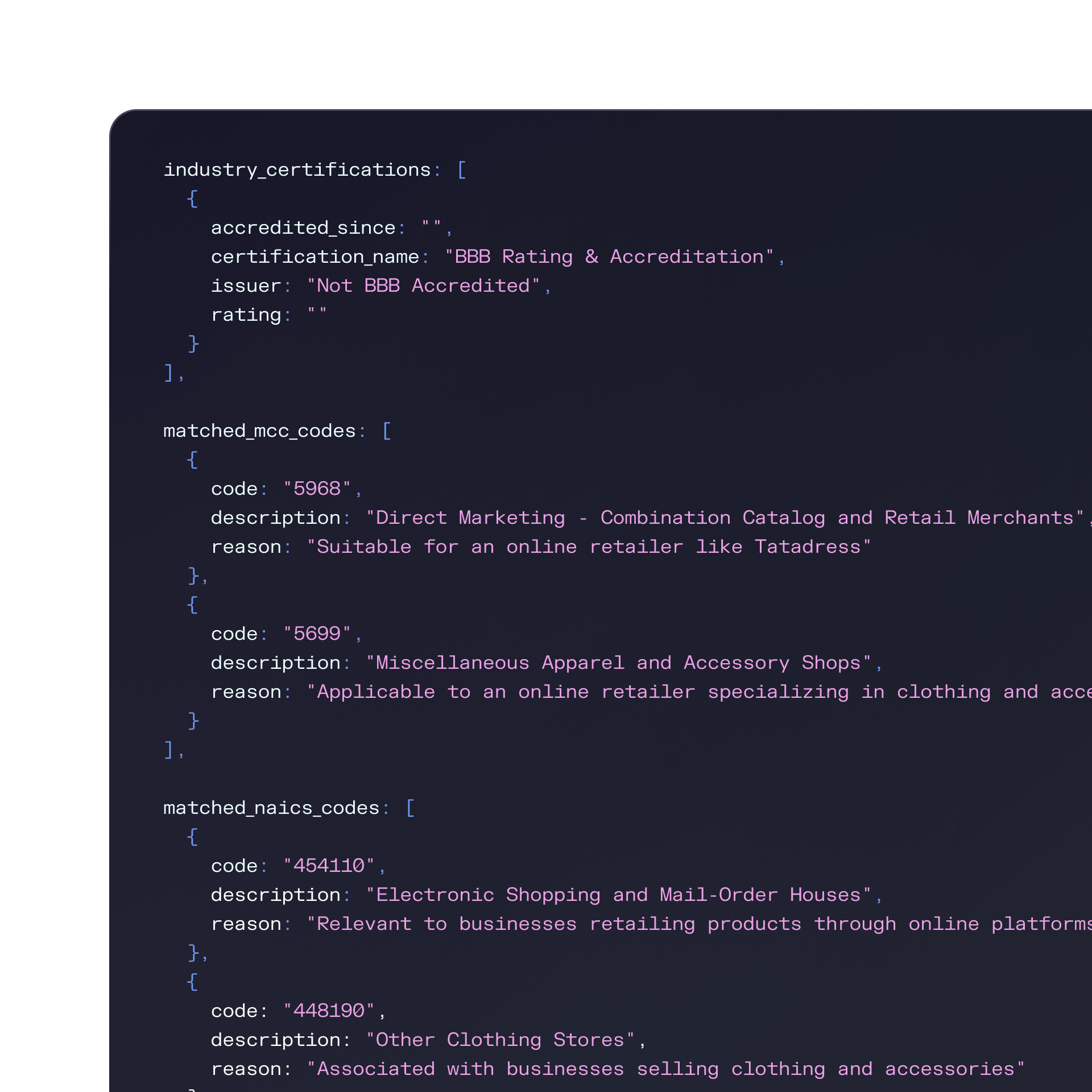
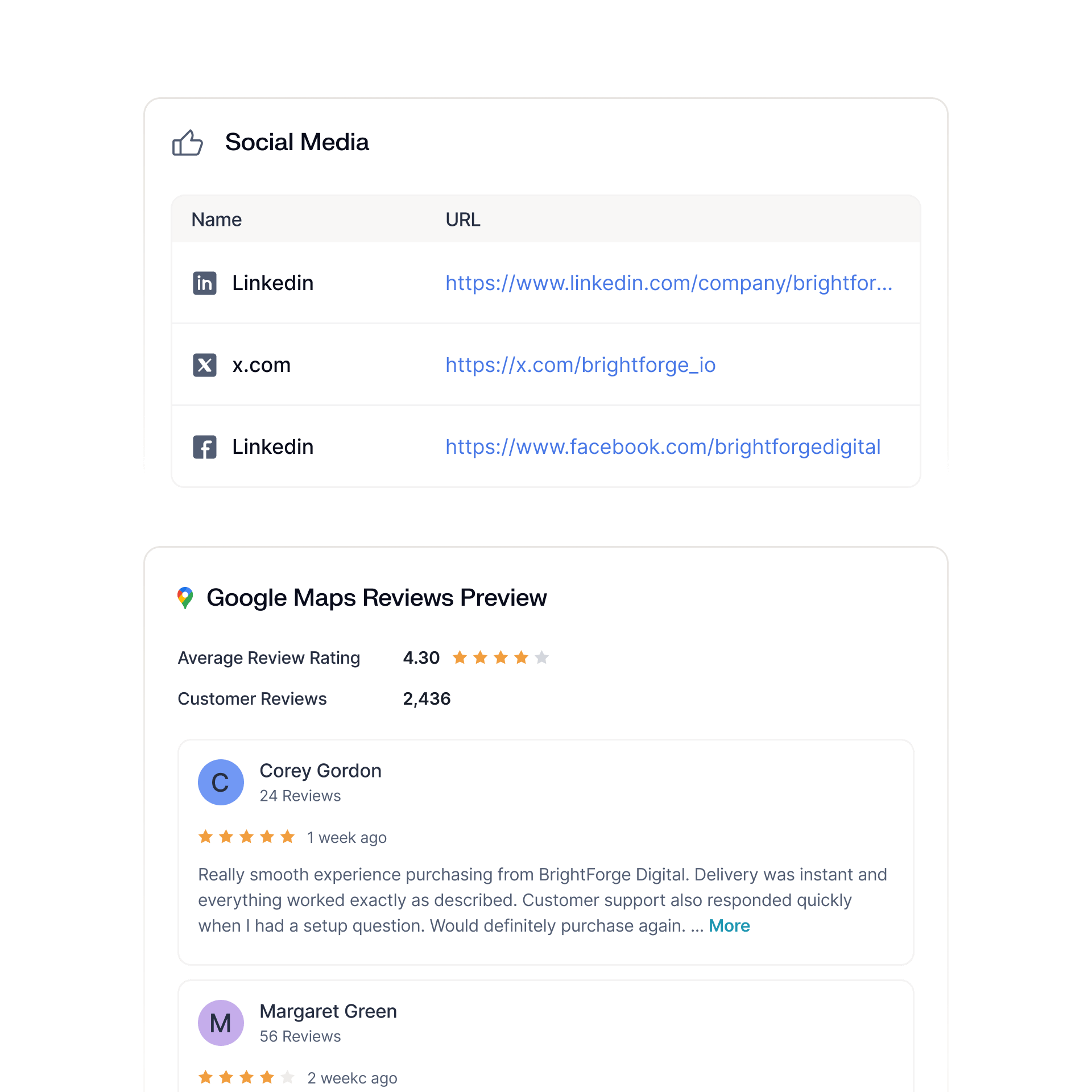
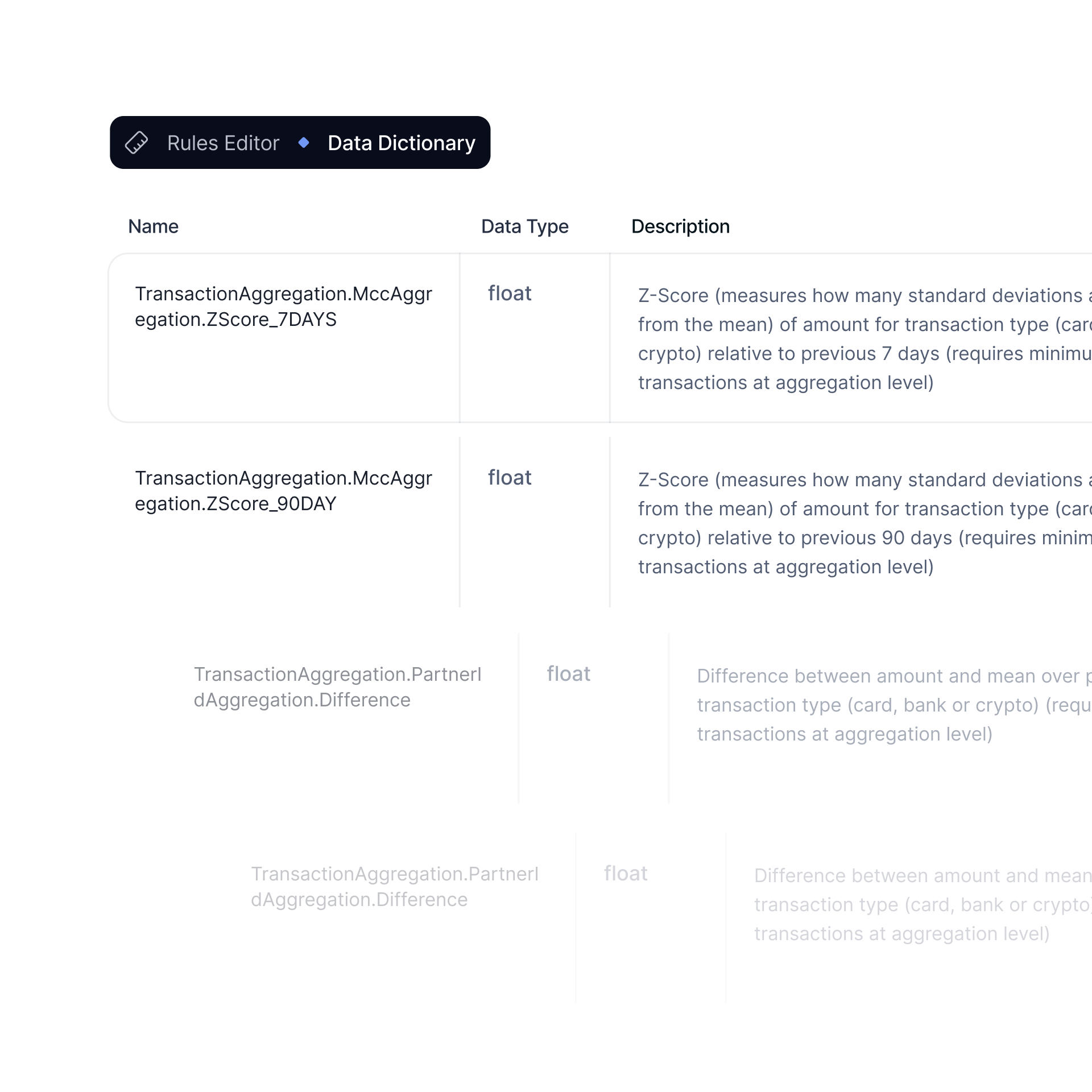
Identify links to sanctioned entities, transaction laundering, and payments for illicit goods or services.
Low-Visibility Sellers
Monitor sellers with limited business data
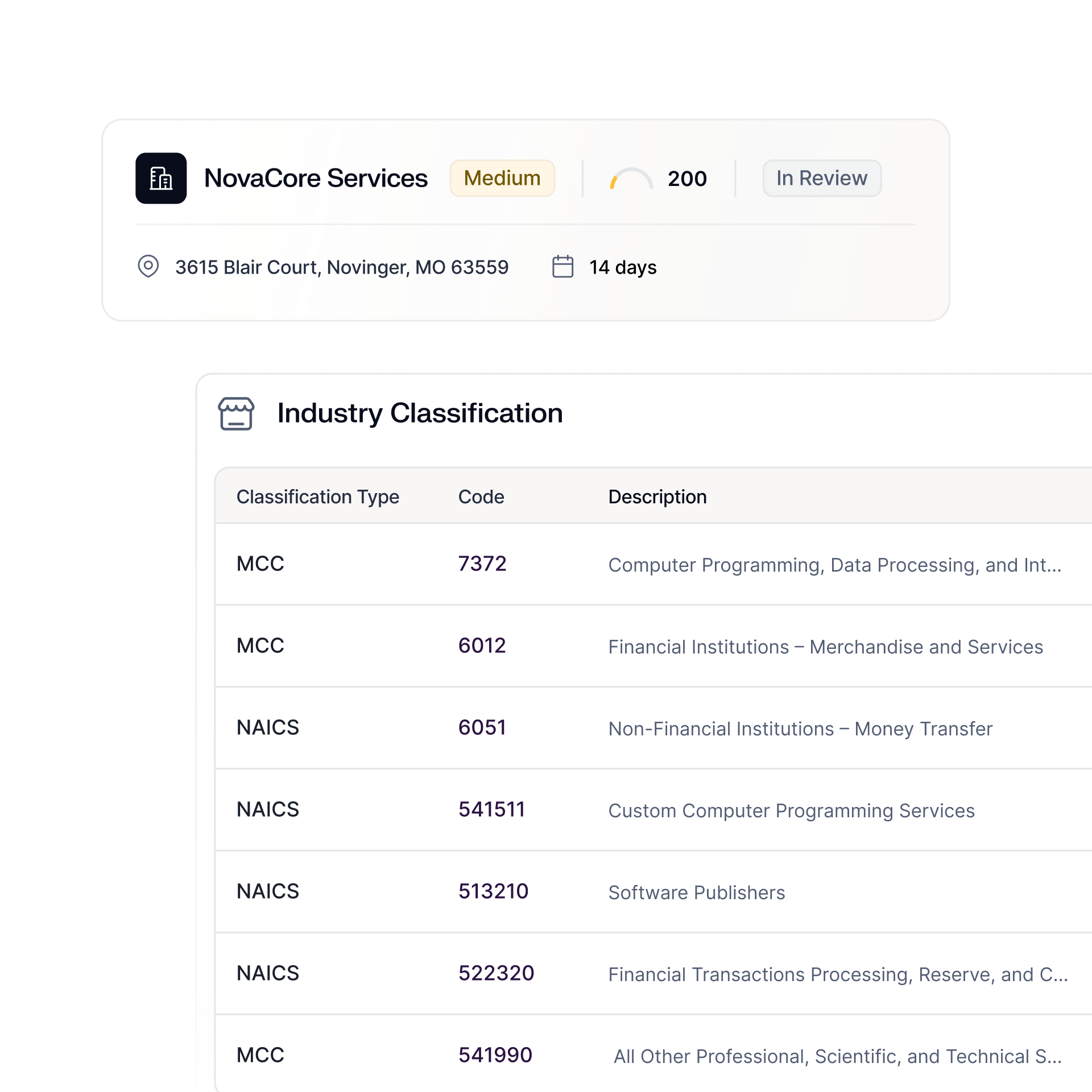
Assess casual, freelance, and unincorporated sellers using alternative signals when traditional business records are sparse.
Account Takeovers
Detect merchant account takeover and repurposing
Use external signals and automated checks to catch compromised accounts, ownership changes, and businesses operating outside their original risk profile.
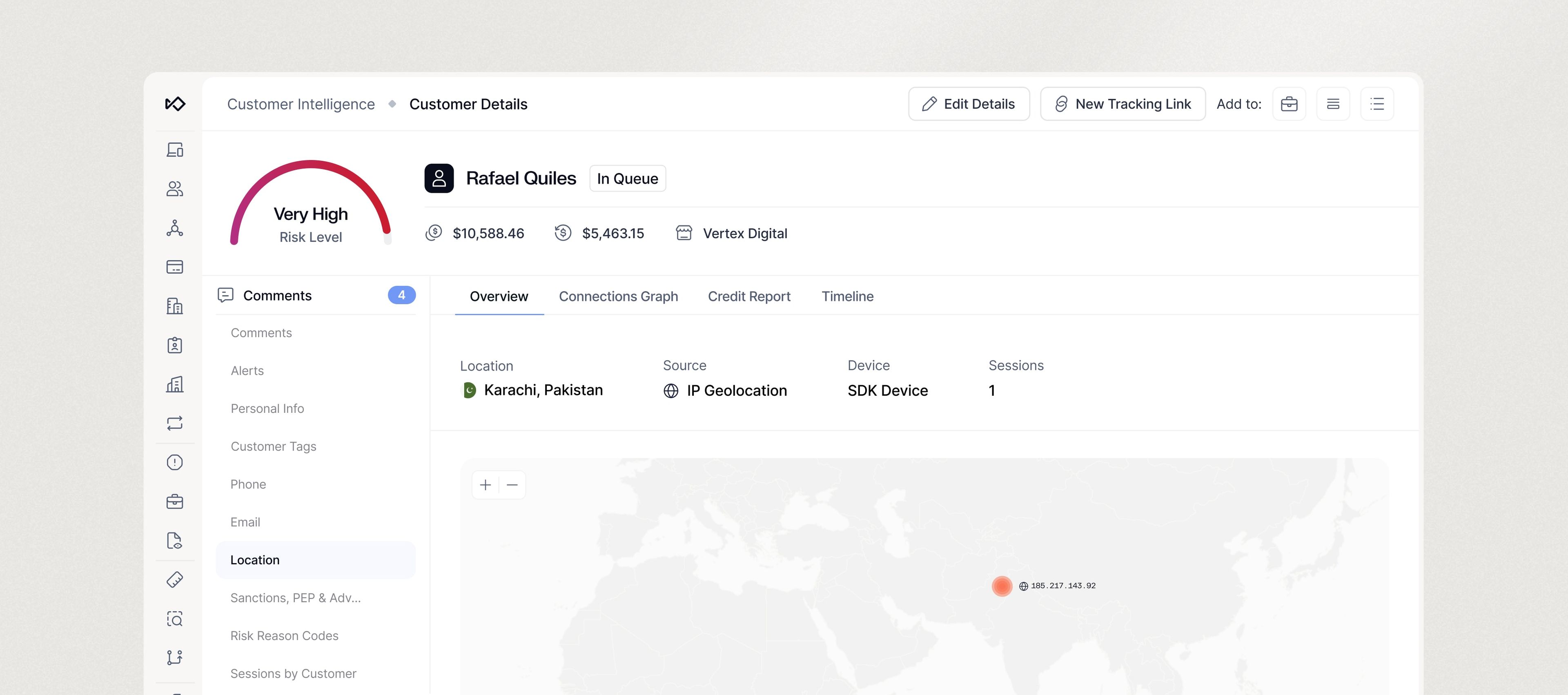

Surface changes in account access, login patterns, and device usage that may indicate account takeover or unauthorized access.

Identify deviations in traffic sources, transaction patterns, MCC usage, and processing behavior against the merchant’s historical baseline.

Use proprietary signals to spot accounts that have been transferred, resold, or operating outside their approved business model.
Streamline merchant monitoring with agentic AI
Continuously verify, investigate, and flag merchant risk without manual reviews.
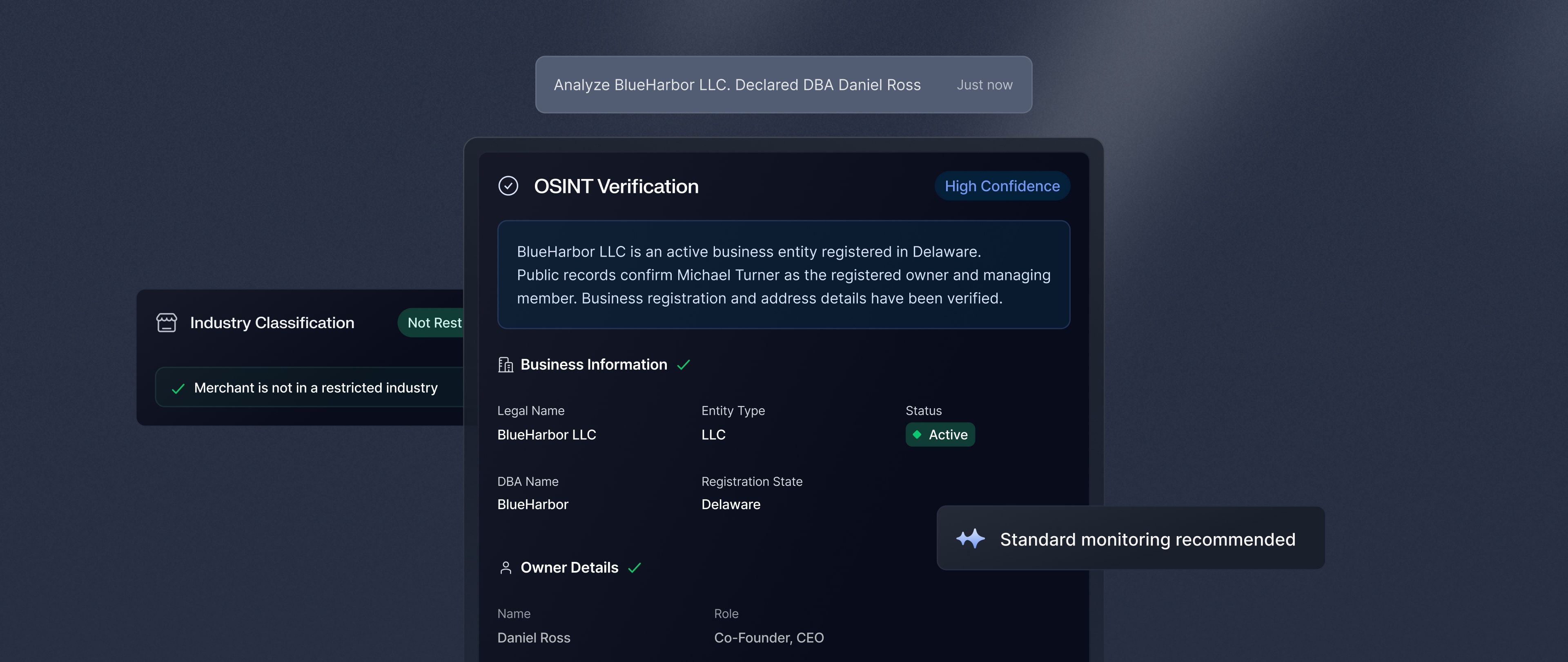
Merchant controls built on a comprehensive data platform
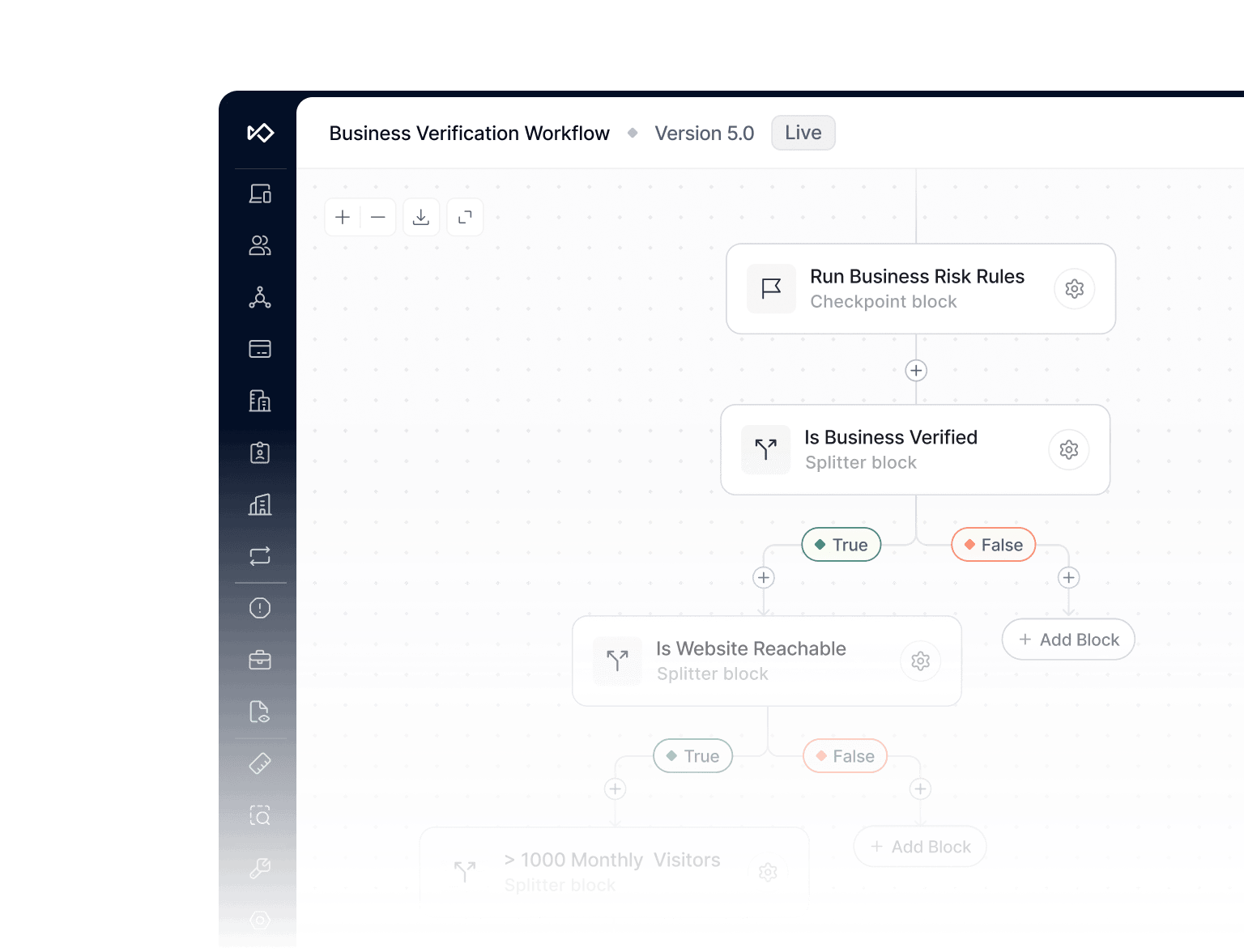
Rules & Workflows
Configure and automate risk-based workflows
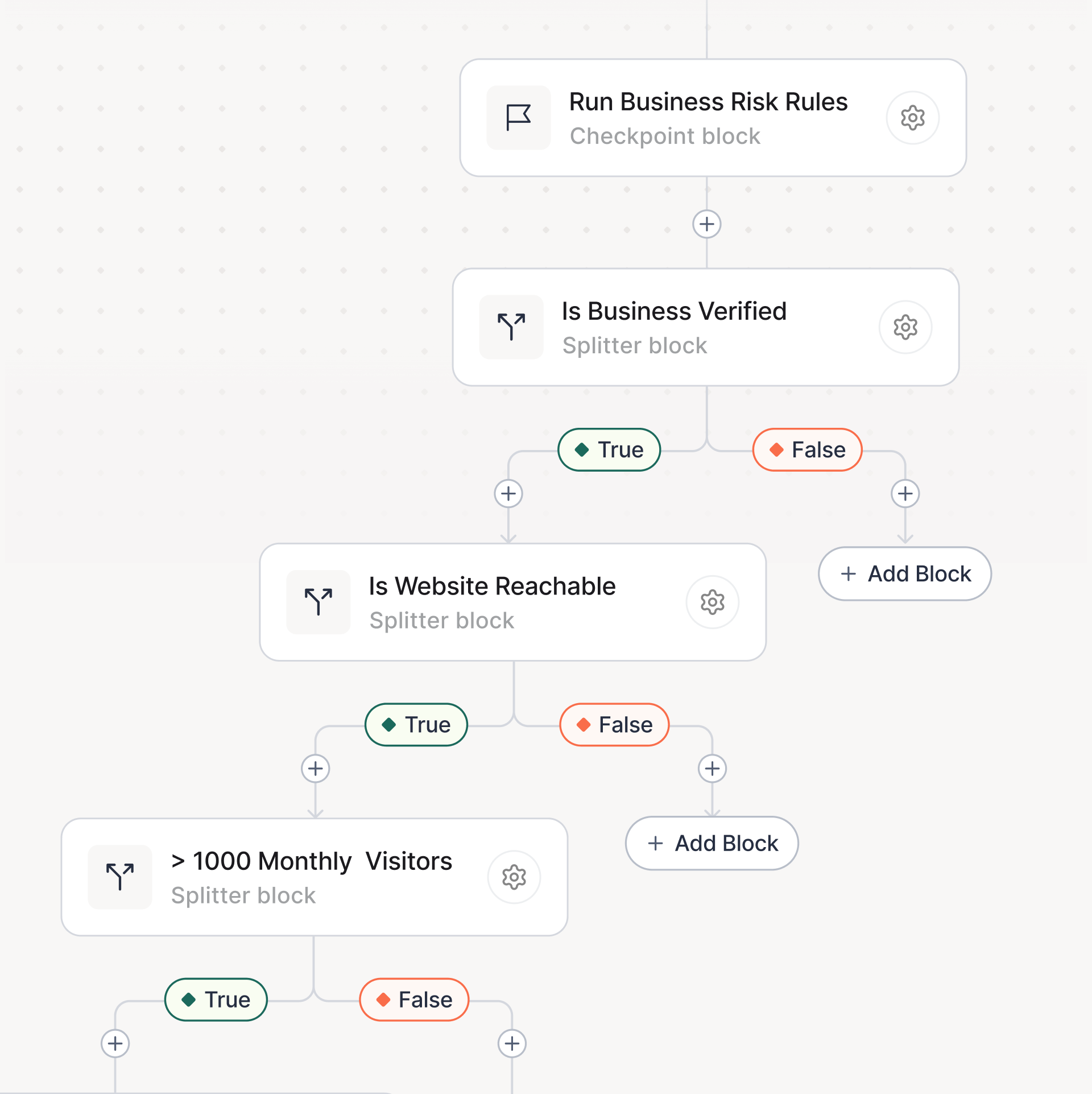
No-code rules and workflows translate merchant risk signals into reviews, step-ups, and enforcement across your portfolio.


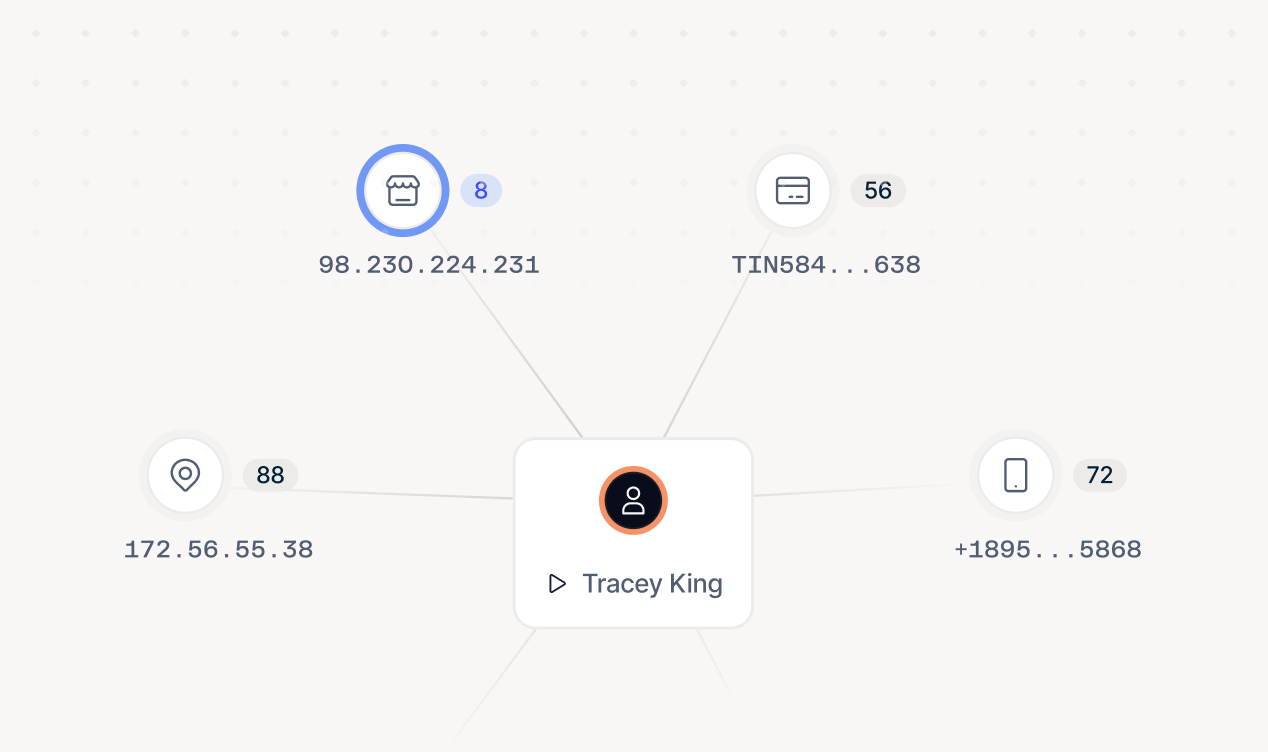
Fraud Investigations
Reveal hidden merchant relationships
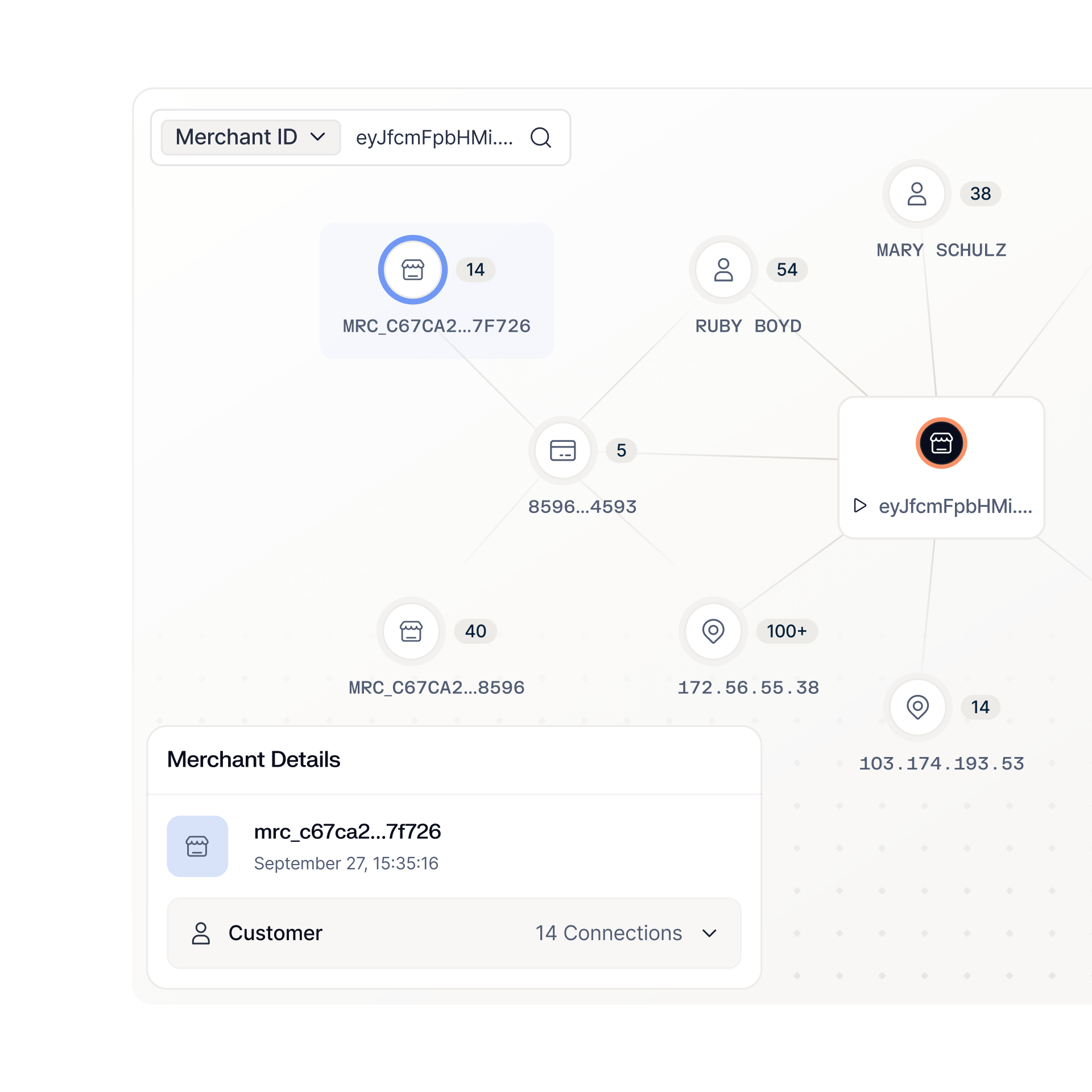
Link merchants, domains, devices, transactions, and entities to uncover coordinated risk and transaction laundering.
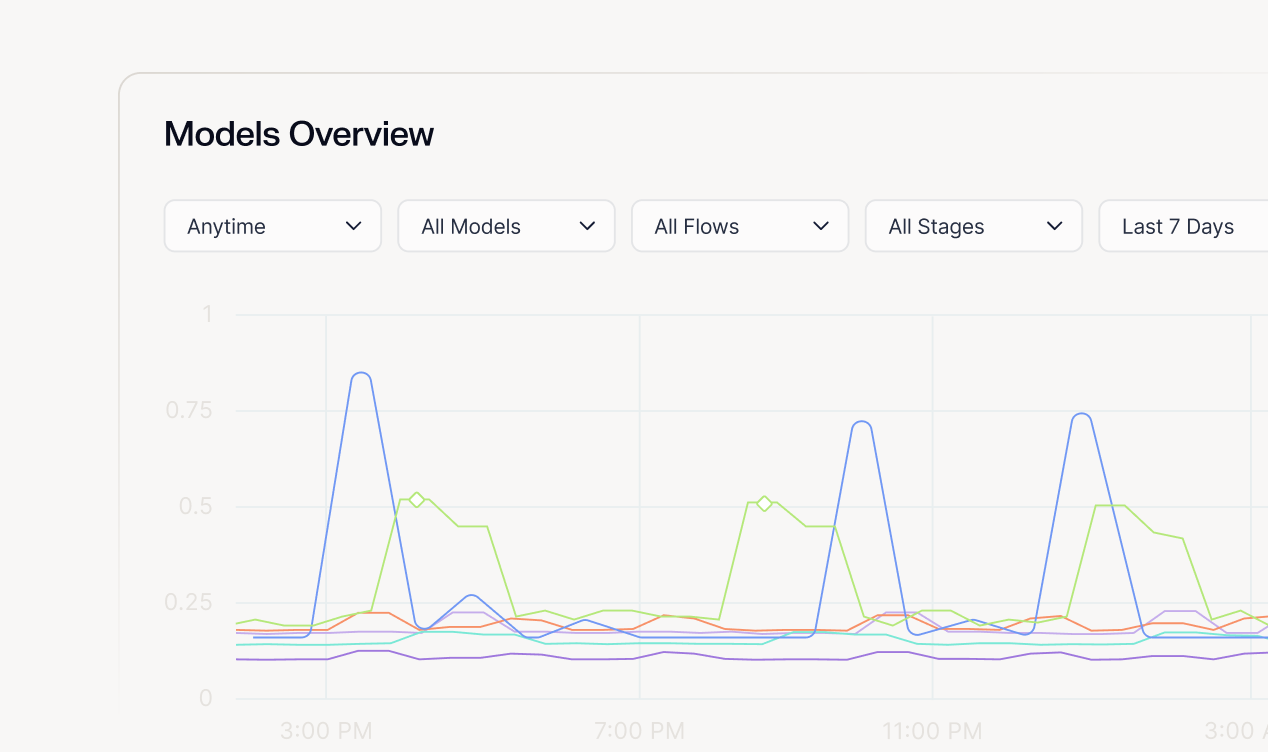
Machine Learning
Surface emerging merchant risk
Continuously analyze transactions, web intelligence, and network behavior to detect subtle merchant risk patterns early.


Monitor merchant risk beyond onboarding
Frequently asked questions

How does Merchant Risk Monitoring differ from transaction monitoring?
Transaction monitoring evaluates individual payments, often focusing on buyer behavior and AML triggers. Merchant risk monitoring evaluates the merchant as an evolving entity, analyzing behavior shifts, transaction patterns, digital footprint changes, chargebacks, and hidden relationships over time. This broader view enables earlier merchant risk detection and reduces blind spots that transaction-level alerts cannot surface.
How quickly can merchant risk detection identify changes in merchant behavior?
Merchant behavior monitoring runs continuously rather than on periodic review cycles. Changes in authorization rates, dispute trends, web content, access patterns, or transaction mix are evaluated in real time, enabling early risk detection before losses escalate.
How does this platform support AML merchant monitoring and card-network programs like VAMP?
The merchant risk platform aligns monitoring with Visa, Mastercard, VAMP, and regional AML requirements by tracking scheme thresholds, transaction laundering indicators, and compliance risk signals. Built-in workflows document actions, escalations, and outcomes to ensure audit-ready compliance and regulatory readiness.
Can merchant monitoring be customized by risk tier, vertical, or geography?
Yes. Teams can configure monitoring rules, thresholds, and workflows based on merchant risk tier, industry, geography, or card-network requirements. This allows higher-risk merchants to receive closer scrutiny while lower-risk merchants are monitored with minimal friction.
How does merchant risk monitoring detect transaction laundering and undisclosed merchant activity?
The platform correlates transaction patterns, MCC shifts, digital footprint analysis, and network intelligence to identify transaction laundering risk, prohibited activity, and merchant business model pivots that diverge from declared operations.
How does the platform uncover hidden merchant relationships?
Connections Graph technology links merchants, domains, devices, transactions, and entities across the ecosystem to expose coordinated risk, shell entities, and previously sanctioned relationships that would otherwise remain hidden.
How does merchant risk management reduce manual merchant reviews and false positives?
AI agents analyze merchant risk signals across transactions, web intelligence, and behavioral data to automate merchant reviews, escalate only high-risk cases, and lower operational burden without sacrificing visibility.
How does merchant account monitoring detect takeover, misuse, or repurposing?
Behavioral changes in access patterns, device usage, ownership signals, and transaction flows are compared against historical baselines to identify merchant account takeover, account resale, or repurposed activity early.